
Pre & Postnatal
Supporting you to stay strong through pregnancy and return to exercise after birth.
Pregnancy and having a baby bring significant changes to your body, but that doesn't necessarily mean giving up the exercise you enjoy.
Women I've coached during pregnancy have continued strength training and attended their usual sessions, with exercises adapted as their bodies and needs change.
Rather than offering a separate pregnancy exercise class, my approach is to provide individual guidance and support, whether that's through one-to-one coaching or adapting existing group sessions.
Training during pregnancy
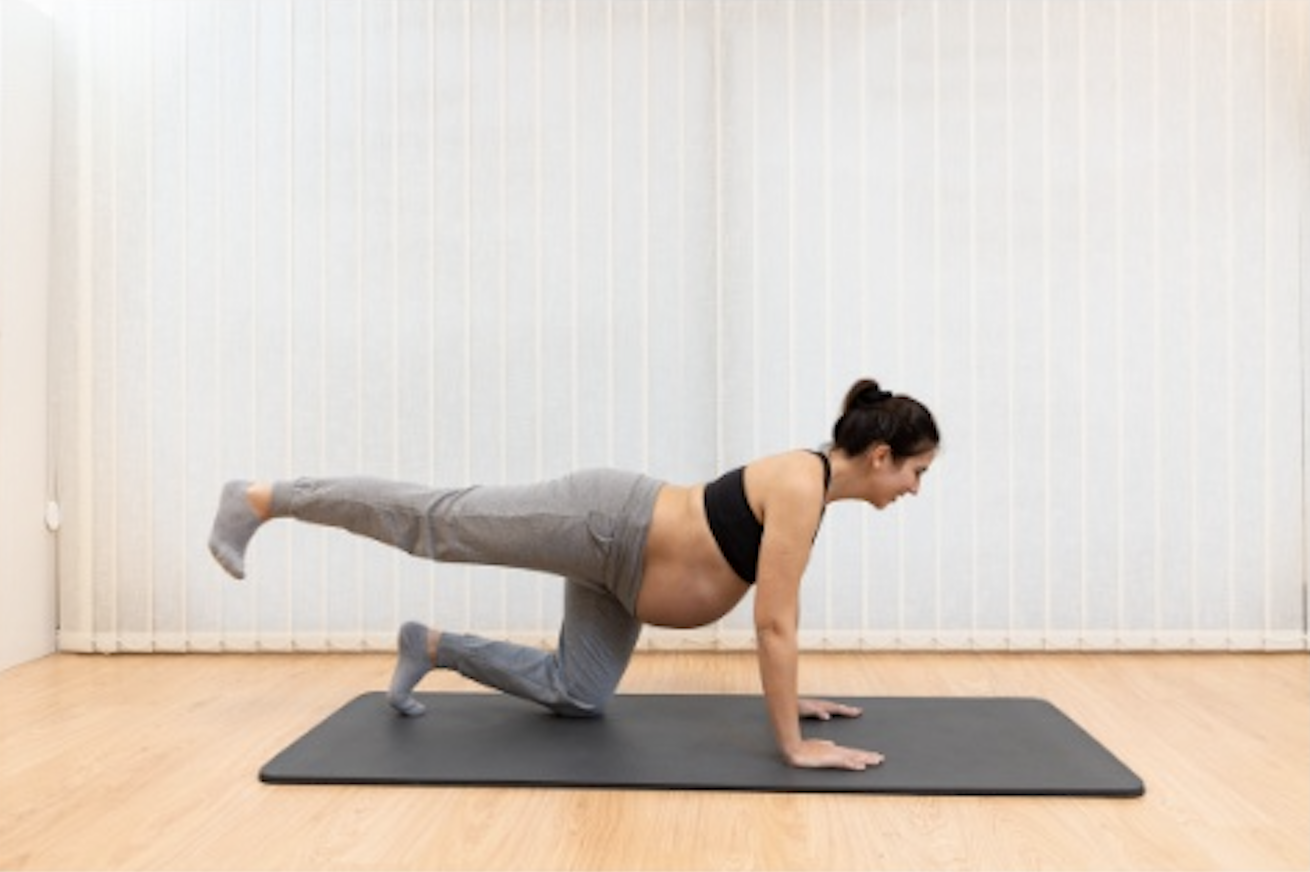
If you're already training with me and become pregnant, in most cases you can continue to exercise throughout your pregnancy, with your training adapted according to how you're feeling and the changes happening in your body.
Staying active during pregnancy has many benefits for both mum and baby. Regular exercise can help maintain strength and fitness, support physical and mental wellbeing, and may reduce the risk of some pregnancy-related complications.
As your pregnancy progresses, this might mean adjusting exercise selection, load, intensity, range of movement, impact or position, and paying closer attention to how exercise feels rather than chasing previous numbers or performance.
The aim isn't to maintain exactly what you could do before pregnancy. It's to help you keep moving, maintain strength and continue doing something you enjoy, while adapting your training appropriately for this stage of your life.
As a qualified Pre & Postnatal Personal Trainer, if you become pregnant while training with me, I'll adapt your ongoing training to support you through your pregnancy.
If you're pregnant and haven't trained with me before, please get in touch. I'd recommend starting with an individual coaching session so that we can talk through your pregnancy, previous exercise experience and what you'd like to continue doing.
Returning to exercise after having your baby
There's no right time for returning to exercise after giving birth.
Recovery is different for every woman and can be influenced by your pregnancy and birth experience, how your body is healing, pelvic floor and abdominal function, sleep, energy levels and how you're feeling both physically and emotionally.
There's no need to rush back into exercise. Start gently, listen to your body and give yourself time to rebuild strength and fitness at a pace that feels right for you.
Pelvic health check
I strongly recommend a pelvic health physiotherapy assessment after pregnancy and birth, whether you've had a vaginal or caesarean delivery.
This is particularly important if you're experiencing symptoms such as bladder leakage, a feeling of heaviness, pelvic pain or concerns about your abdominal muscles.
Think of it as a postnatal MOT! A specialist pelvic health physiotherapist can assess your abdominal wall and pelvic floor function and provide individual clinical advice.
NHS Pelvic Health Physiotherapy Service.
If you live in Powys, you can self-refer to the NHS Pelvic Health Physiotherapy Service: Powys Teaching Health Board – Pelvic Health Physiotherapy Service
Related resources:
For women planning to return to running after having a baby: Returning to Running Postnatal Guidelines (Goom, Donnelly & Brockwell, 2019).

Building back to the things you enjoy
Your body has been through significant changes during pregnancy and birth, and deserves time, care and attention as it recovers.For some women, returning to exercise means gradually reintroducing the strength training they enjoyed before pregnancy, starting with lighter loads and building up over time.
For others, we may begin with gentler, restorative movement, focusing on mobility, breathing, posture and reconnecting with the abdominal and pelvic floor muscles before gradually increasing the challenge.
Where appropriate, I may also introduce hypopressives as a complementary breathing and postural technique to support body awareness and coordination. You can find out more on my Strong Within page.
The aim isn't to rush back to where you were before pregnancy, but to support your recovery, gradually rebuild strength and confidence, and help you return to the activities you enjoy, whatever those may be.

Ready to return to training?
If you've recently had a baby and not sure where to begin, do get in touch. We can talk about how you're feeling, what you'd like to get back to doing and the best way to approach your return to exercise, at a pace that feels right for you.